
Pawsome Pals
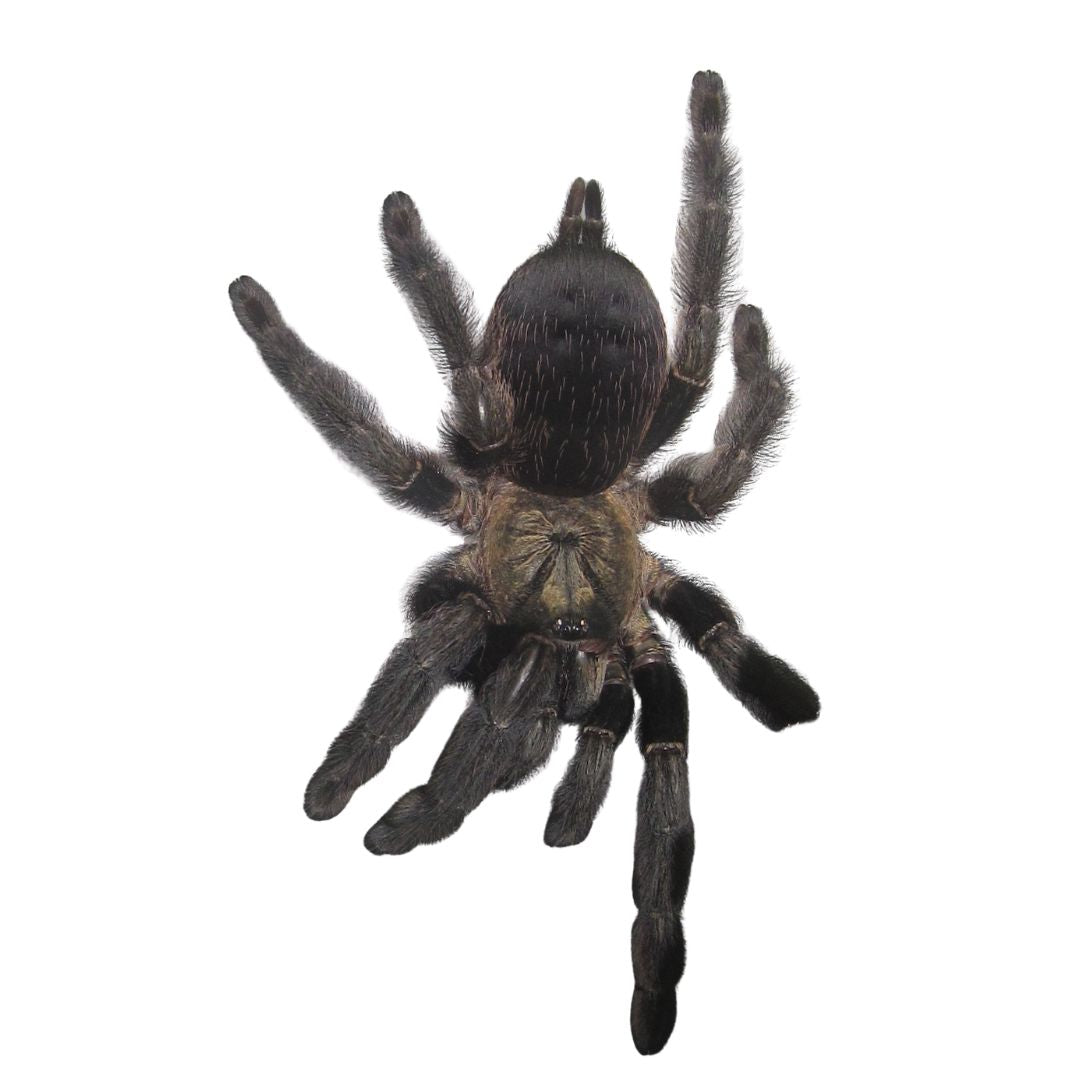
Psalmopoeus Reduncus - Costa Rican Orange Mouth Tarantula (Juvenile)
Psalmopoeus Reduncus - Costa Rican Orange Mouth Tarantula (Juvenile)
Couldn't load pickup availability
Psalmopoeus reduncus (Costa Rican Orange Mouth Tarantula)
If you're ready to step into the fast lane of arboreal tarantulas, the Costa Rican Orange Mouth Tarantula is an exciting and rewarding choice. Psalmopoeus reduncus is instantly recognisable by its vivid orange mouthparts, a striking contrast against its dark, earthy body tones—making it a standout species for keepers who appreciate subtle but dramatic beauty.
This fast-growing arboreal tarantula is known for its speed, bold attitude, and heavy webbing behaviour. Given a cork tube and vertical space, it quickly builds a silk-lined retreat, often remaining visible at night as it waits in ambush. With lightning-fast feeding responses and active growth, it offers constant interest from juvenile to adult.
Often described as a perfect "bridge species" between beginner arboreals and more intense Old World tarantulas, Psalmopoeus reduncus delivers an Old World–style experience without urticating hairs. Hardy when kept warm and humid, it's best suited to confident keepers who enjoy observation over interaction.
Why keepers love the Costa Rican Orange Mouth
-
Unique bright orange chelicerae
-
Fast growth and hardy nature
-
Heavy webbing inside the cork bark retreats
-
Excellent intermediate arboreal tarantula
-
Active, bold, and exciting feeding behaviour
Experience Level
⚠️ Intermediate
Fast, bold, and defensive when disturbed. Not suitable for handling or beginner keepers, but an excellent step up from beginner arboreal species.
Enclosure & Setup
A true arboreal species that needs height and secure climbing space.
-
Tall arboreal enclosure with good ventilation
-
A secure, escape-proof enclosure is essential
-
Vertical cork bark tube or hollow log (required retreat)
-
Branches and foliage for climbing and webbing
Substrate
Used to maintain humidity rather than for burrowing.
-
Depth: 5–10 cm (2–4 inches)
-
Moist (not wet) coco fibre or topsoil mix
-
Spot clean as needed
Temperature & Humidity
Warm, humid conditions mimic its natural rainforest habitat.
-
Temperature: 23–27°C (74–80°F)
-
Humidity: 70–80%
-
Light, regular misting
-
Always ensure airflow to prevent stagnant air
Feeding
An enthusiastic and fast ambush feeder.
-
Diet: Crickets, roaches, locusts, mealworms
-
Spiderlings: 2–3× per week
-
Juveniles: Weekly
-
Adults: Every 10–14 days
Remove uneaten prey after 24 hours.
Temperament & Handling
Not a handling species.
-
Very fast and reactive
-
Will bolt rather than flick hairs
-
No urticating hairs
-
Best appreciated through observation
Behaviour & Visibility
Primarily nocturnal but often visible.
-
Builds dense webbing inside cork bark retreats
-
Frequently seen waiting at the entrance of its hide
-
Active and alert, especially after dark
Size & Lifespan
-
Adult size: 11–14 cm (4.5–5.5 inches) leg span
-
Females: 10–12 years
-
Males: 3–4 years
Important Care Notes
-
Always open enclosures cautiously — fast escape artists
-
Use long tools during maintenance
-
Avoid sudden movements
-
Ideal as a stepping-stone before Old World arboreals
Photo Credit: Micha L. Rieser, Attribution, via Wikimedia Commons
Share