
Pawsome Pals
Monocentropus balfouri - Socotra Island Blue Baboon (Sling)
Monocentropus balfouri - Socotra Island Blue Baboon (Sling)
Couldn't load pickup availability
Socotra Island Blue Baboon Tarantula (Monocentropus balfouri)
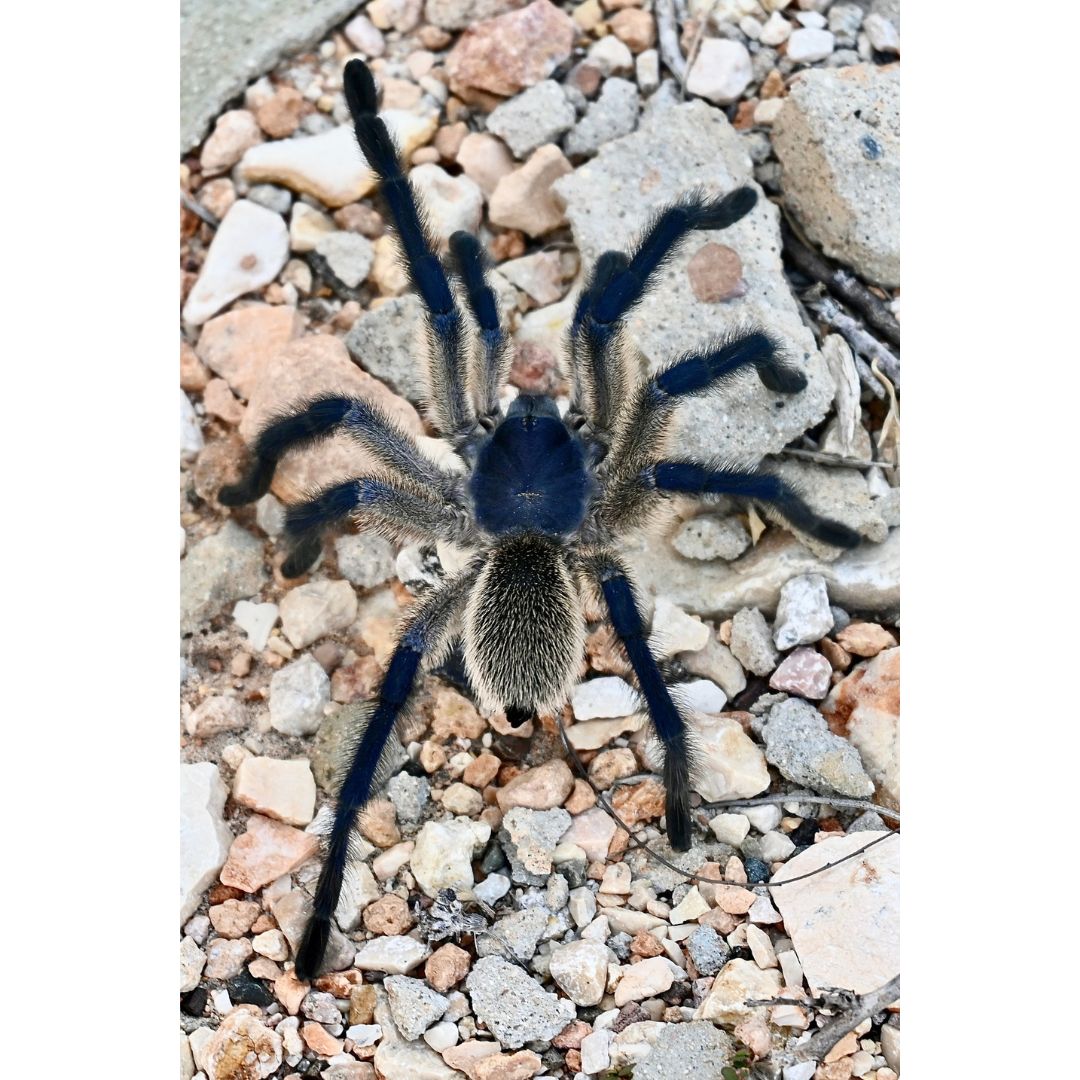
If you are looking for a tarantula with extraordinary colour, intricate webbing behaviour and a fascinating personality, the Socotra Island Blue Baboon Tarantula is a truly remarkable species. Monocentropus balfouri is an Old World tarantula admired for its vibrant blue legs, contrasting golden-orange carapace and attractive cream-to-tan markings. Its striking appearance and impressive silk structures make it a standout addition to a specialist tarantula collection.
Native to Socotra Island, Yemen, this species inhabits a relatively dry environment and is well known for creating extensive silk-lined retreats. Unlike many tarantulas, M. balfouri can sometimes be kept communally under suitable conditions, making it particularly interesting to experienced keepers. However, communal housing is never risk-free, and individual spiders may still injure or eat one another.
Although often considered less reactive than some other Old World baboon tarantulas, the Socotra Island Blue Baboon can move extremely quickly and may become defensive when disturbed. It lacks urticating hairs, so its primary defences include speed, threat displays and a potentially painful bite. This species is best appreciated through observation rather than handling.
Why keepers love Monocentropus balfouri
-
Electric blue legs contrasted with a warm golden-orange carapace
-
Intricate webbing behaviour, creating extensive silk-lined retreats and tunnels
-
Fascinating natural behaviour, including burrowing, hunting and exploring its enclosure
-
Unusual communal potential, a rare and intriguing trait among tarantulas
-
Distinctive Old World appearance, making it a prized species for dedicated keepers
-
Long-lived females, offering the opportunity to enjoy this beautiful species for many years
Care Summary – Socotra Island Blue Baboon (Monocentropus balfouri)
Difficulty Level
Intermediate. Its basic care requirements are manageable, but its speed, defensive potential and Old World venom make secure housing and confident, hands-off husbandry essential. It is generally better suited to keepers with some tarantula experience.
Adult Size
Approximately 10–14 cm (4–5.5 inches) in leg span is a useful typical range, although larger individuals may occur.
Enclosure Type
Terrestrial, with opportunistic burrowing and extensive web-building behaviour.
Provide a secure enclosure with adequate floor space, a suitable retreat and plenty of anchor points for webbing. Keep the distance between the substrate and the enclosure lid relatively short to reduce the risk of injury from falls.
Substrate
Provide approximately 5–10 cm of suitable substrate for juveniles, increasing the depth as necessary for larger specimens and burrowing behaviour.
Coconut fibre, pesticide-free organic topsoil or a suitable combination can be used. The substrate should be mostly dry to slightly moist in selected areas, never waterlogged. A dry-leaning setup with a small moisture gradient is preferable to continuously damp substrate.
Temperature
Approximately 22–28°C (72–82°F) is a practical captive range.
Maintain a stable temperature and avoid extreme fluctuations. Normal room temperatures within a suitable range are generally preferable to direct, intense heating. If additional warmth is required, warm the room rather than placing a heat source directly against the enclosure.
Humidity
A dry to moderately moist environment with good ventilation is appropriate. Avoid relying on a fixed humidity percentage or keeping the substrate permanently wet.
Provide access to fresh water when the spider is large enough to use a suitable shallow dish. For tiny slings, offer small water droplets on the enclosure wall or another safe surface, allowing them to drink without creating excessive moisture.
Decor & Setup
-
Cork bark or a secure ground-level hide
-
Suitable substrate for burrowing and establishing retreats
-
Cork pieces, branches or other secure structures for web anchoring
-
A shallow water dish for larger juveniles and adults
-
Good cross-ventilation to prevent stagnant air
-
Secure, escape-proof ventilation openings appropriate to the spider's size
Expect this species to cover parts of its enclosure in silk. Extensive webbing is normal behaviour and should not be removed unnecessarily.
Feeding
-
Suitable live feeder insects, such as appropriately sized crickets and roaches
-
Slings: offer small prey approximately 2 times per week, adjusting to appetite and body condition
-
Juveniles: generally feed around once every 5–7 days, depending on growth and prey size
-
Adults: typically feed every 7–14 days, depending on body condition and feeding response
Remove uneaten prey, particularly when the tarantula is in premoult or moulting. Do not force-feed a spider that refuses food. Always provide suitable access to water.
Temperament & Handling
Fast-moving, generally reclusive and potentially defensive. Although some individuals can appear relatively calm, behaviour varies and should never be relied upon as a guarantee of safety.
As an Old World tarantula, M. balfouri lacks urticating hairs and can deliver a painful bite. Its venom should be treated seriously.
Handling is not recommended. Use a catch cup and appropriate tools for transfers and enclosure maintenance, and take care to prevent escapes.
Lifespan
-
Females: approximately 10–15 years, sometimes longer
-
Males: approximately 3–5 years
These are estimates rather than guarantees. Actual lifespan varies with sex, maturation, individual genetics and husbandry.
Please note: Communal keeping is possible with this species but is not guaranteed to succeed. It requires appropriate group planning, adequate space, multiple retreats and careful feeding and monitoring. Cannibalism and injury remain possible. For most keepers, individual housing is the more straightforward option.
As a sling, your Socotra Island Blue Baboon Tarantula will develop its characteristic blue and golden-orange colouration through successive moults. Its web-building and burrowing behaviours may also become more pronounced as it grows.
Photo credit: Arabella Willing, CC BY 4.0, Wikimedia Commons.
Share