
Pawsome Pals
Davus pentaloris - Guatemalan Tiger Rump (Sling)
Davus pentaloris - Guatemalan Tiger Rump (Sling)
Couldn't load pickup availability
Davus pentaloris — Guatemalan Tiger Rump (Sling)
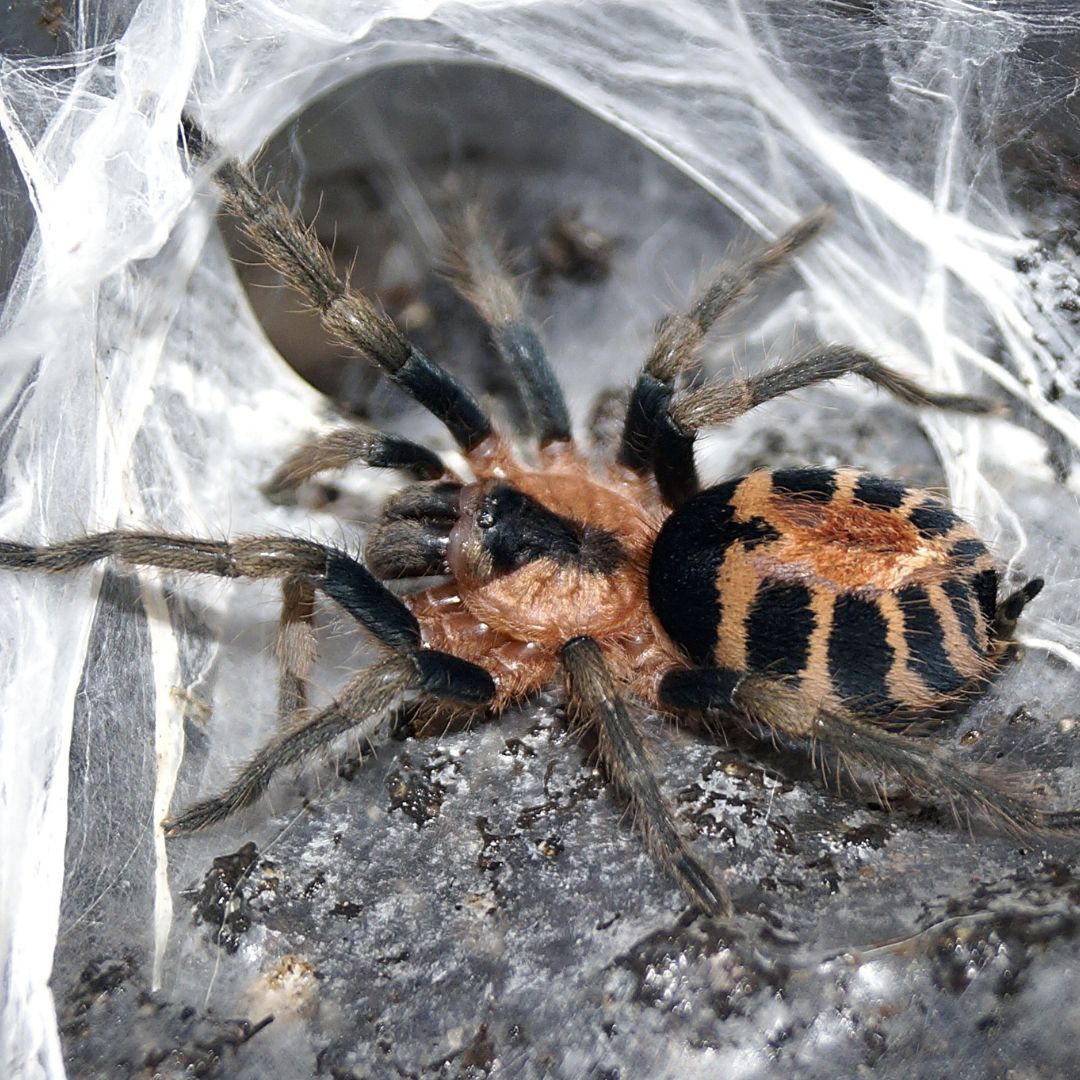
A Striking Beginner-Friendly Species with Bold Tiger Markings
The Guatemalan Tiger Rump Sling is a beautiful and highly sought-after New World tarantula known for its distinctive tiger-striped abdomen and manageable temperament. Davus pentaloris combines attractive colouration, relatively straightforward care, and fascinating behaviour, making it a favourite among both new and experienced keepers.
With its contrasting patterns, moderate growth rate, and active feeding response, this species offers plenty of enjoyment throughout every stage of its development.
If you're looking for a visually impressive tarantula that doesn't require advanced care, the Guatemalan Tiger Rump is an excellent choice.
Why You'll Want This Species
-
Striking tiger-striped abdominal pattern
-
Excellent beginner to intermediate species
-
Hardy and adaptable care requirements
-
Active feeder with an enthusiastic hunting response
-
Attractive colouration from a young age
-
A rewarding species to raise from sling to adult
Quick Facts
-
Scientific Name: Davus pentaloris
-
Common Name: Guatemalan Tiger Rump
-
Origin: Guatemala and parts of Central America
-
Adult Size: Approximately 10–12 cm leg span
-
Temperament: Generally calm, occasionally skittish
-
Lifespan:
-
Females: 12–15 years
-
Males: 3–4 years
-
Appearance
The Guatemalan Tiger Rump is admired for its bold contrast and unique markings:
-
Dark brown to black body
-
Distinctive orange, tan, and black tiger-striping on the abdomen
-
Subtle orange tones on the legs
-
Compact, attractive build
Its striking abdominal pattern makes it one of the most recognisable species in the hobby.
Enclosure & Setup Guide (By Life Stage)
Sling
-
Enclosure: Small sling enclosure or vial
-
Substrate Depth: 3–5 cm
-
Setup: Small hide and good ventilation
-
Tip: Keep one corner of the substrate slightly moist while allowing most of it to remain dry
Juvenile
-
Enclosure: Small terrestrial enclosure
-
Substrate Depth: 5–8 cm
-
Setup: Cork bark hide and shallow water dish
Sub-Adult
-
Enclosure: Medium terrestrial enclosure
-
Substrate Depth: 8–10 cm
-
Setup: Hide, water dish, and optional décor
Adult
-
Enclosure: Terrestrial setup with ample floor space
-
Substrate Depth: 10–15 cm
-
Setup Essentials:
-
Hide
-
Water dish
-
Natural décor such as cork bark or leaf litter
-
Ideal Conditions:
-
Temperature: 22–27°C
-
Humidity: 60–70%
-
Lighting: Low to moderate
-
Ventilation: Good airflow
Feeding Guide
Diet:
Crickets, roaches, mealworms, and other appropriately sized feeder insects.
Feeding Schedule:
-
Slings: 2–3 times per week
-
Juveniles: Once per week
-
Sub-adults: Every 7–10 days
-
Adults: Every 10–14 days
This species is generally a strong feeder and readily accepts prey throughout most of its life.
Behaviour & Handling
-
Generally calm but can be quick when startled
-
May spend time sitting outside its hide
-
Creates light webbing around its enclosure
-
May flick urticating hairs if stressed
-
Handling is not recommended, but temperament is typically manageable
Its balance of visibility and manageable behaviour makes it a popular display species.
Important Considerations
-
Venom: Mild (New World species)
-
Visibility: Moderate to high
-
Growth Rate: Moderate
-
Experience Level: Beginner to intermediate
This species offers an excellent combination of beauty, hardiness, and ease of care.
Why Start With a Sling?
Starting with a sling allows you to:
-
Watch the tiger-striping become more pronounced with each moult
-
Experience every stage of development
-
Build confidence with a hardy and forgiving species
-
Raise a beautiful specimen from the very beginning
Ready to Add a Classic Favourite to Your Collection?
The Guatemalan Tiger Rump Sling is perfect for keepers who want an attractive, active, and easy-to-care-for tarantula with distinctive markings and plenty of personality.
Secure yours today and enjoy one of the hobby's most visually striking New World species.
Photo credit: Matthias via Pixabay
Share